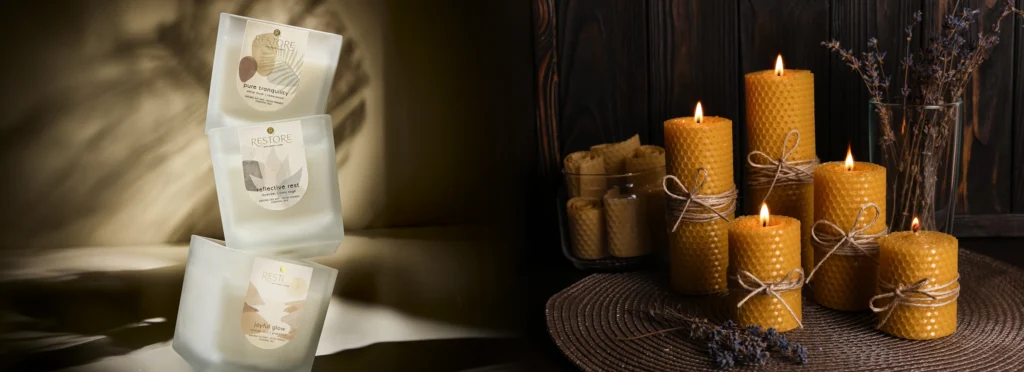
SOY WAX vs BEESWAX CANDLES
Candles have become more than just a source of light – they help create atmosphere, encourage relaxation, and add beautiful fragrance to our homes. Among the most popular natural options today are soy wax and beeswax candles. Both are widely considered cleaner alternatives to traditional paraffin wax. But when it comes to fragrance performance, versatility, and everyday practicality, there are some important differences worth exploring.
What Are Soy Wax and Beeswax?
Soy wax is made by hydrogenating soybean oil, transforming it into a smooth, slow-burning wax suitable for candles. Because soybeans are a renewable crop, soy wax is considered a plant-based and sustainable option.
Beeswax, by contrast, is produced naturally by honeybees to build honeycomb. It has been used in candle making for centuries and is known for its subtle, naturally sweet aroma.
Both waxes are often chosen over paraffin, which is derived from petroleum. The U.S. Environmental Protection Agency notes that burning candles made from petroleum-based waxes can contribute to indoor soot and airborne particles in certain conditions (EPA – Indoor Air Quality). This is one reason many consumers now prefer plant-based or naturally derived waxes.
Burn Quality and Indoor Air
Beeswax candles are often praised for producing very little visible soot and for their long, steady burn. They also emit a faint honey-like scent even without added fragrance.
Soy wax candles also burn cleanly when made with high-quality ingredients and properly trimmed wicks. Because soy wax has a lower melting point, it tends to burn cooler and more evenly. This slower burn can help reduce excess smoke and prolong the life of the candle.
While no candle is completely emission-free, both soy and beeswax are widely regarded as cleaner options compared to paraffin. According to the National Candle Association, well-made candles using quality wax and properly maintained wicks burn safely in normal household conditions (National Candle Association).
Scent Throw and Fragrance Performance
When it comes to fragrance, soy wax often has the advantage. Its structure allows it to hold and disperse fragrance oils effectively, resulting in a consistent “scent throw” both when unlit and while burning.
Beeswax candles typically carry a light, natural honey aroma. While pleasant, this natural scent can compete with or soften added fragrances. As a result, many beeswax candles are sold unscented or with minimal fragrance.
For those who enjoy rich seasonal scents, floral blends, or spa-inspired aromas, soy wax provides greater flexibility and stronger fragrance performance without becoming overpowering.
Burn Time and Cost
Beeswax is dense and can burn for a long time relative to its size. However, it is typically more expensive due to the labour-intensive nature of harvesting and refining beeswax.
Soy wax candles also offer impressive burn times thanks to their cooler, slower burn. At the same time, soy wax is generally more affordable and accessible, making it an appealing choice for everyday use, gifting, and larger candle formats.
Environmental and Ethical Considerations
Both waxes are renewable, but they differ in sourcing. Soy wax is plant-based and can be produced at scale through agriculture. Responsibly sourced soy supports a sustainable supply chain.
Beeswax production depends on beekeeping. While beekeeping plays an important role in pollination, some consumers prefer plant-based products or wish to avoid animal-derived materials entirely. For those seeking a vegan-friendly option, soy wax provides a clear alternative.
The Bottom Line
Soy wax and beeswax candles both offer natural advantages over traditional paraffin. Beeswax delivers a classic, subtle experience with a gentle natural aroma. However, for those looking for strong fragrance throw, affordability, versatility, and a plant-based composition, soy wax candles often emerge as the more practical everyday choice.
Ultimately, the best candle is one that fits your lifestyle – but if scent performance, clean burning, and value are high on your list, soy wax is difficult to beat.